Tracking Pathogens Around the World: Why Reliable Data Matter for Global Avian Health
The promise and challenge of global pathogen surveillance The ability to detect and track infectious diseases across the globe has transformed our understanding of emerging pathogens and the risks they pose to wildlife, livestock and human populations.
· 5 min read
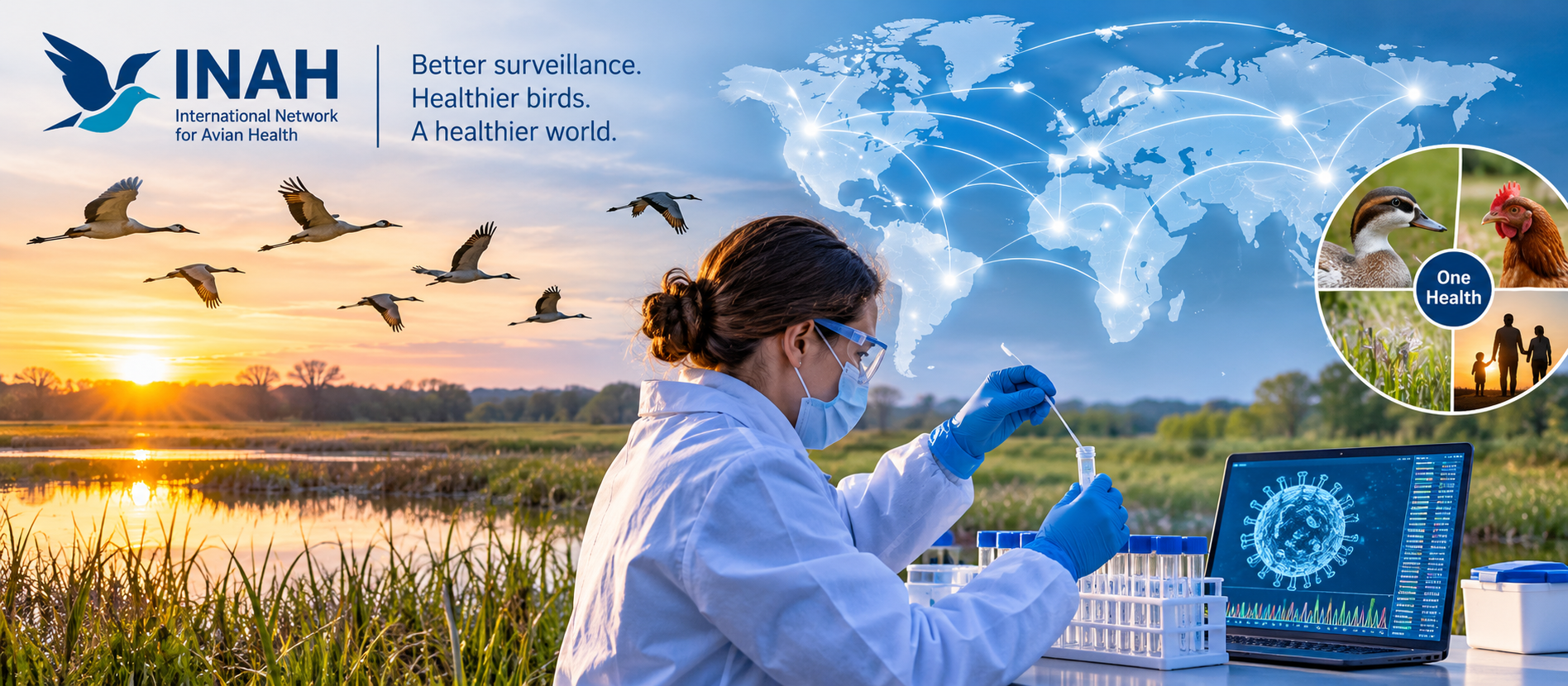
A recent article in Science, “The ‘Pathogen Hunters’ track microbes around the world. But are their data real?”, raises an important question for the international scientific community: how do we ensure that the data underpinning global pathogen surveillance are accurate, reproducible and independently verifiable?
For the International Network for Avian Health, this is a particularly important discussion.
Birds are central to understanding emerging infectious diseases
Birds play a significant role in global disease ecology. Migratory species connect continents, countries and ecosystems, creating opportunities for pathogens to move across geographical boundaries.
Avian influenza is one of the clearest examples. Wild birds, particularly waterbirds, can carry influenza viruses across extensive migratory routes. Understanding where these viruses circulate, how they evolve and which populations are affected is fundamental to effective disease surveillance and preparedness.
However, surveillance extends well beyond the identification of individual pathogens.
It requires robust sampling strategies, accurate laboratory identification, reliable genetic sequencing, appropriate interpretation of results and effective sharing of information between countries and research institutions.
A positive molecular detection is an important finding, but it is only the beginning of the scientific process.
When detection is not the same as verification
Advances in molecular diagnostics and genomic sequencing have made it possible to identify microbial genetic material in an increasingly wide range of samples.
Bird droppings, wastewater, environmental material and biological specimens can all provide valuable information about pathogen circulation.
The Science article highlights questions surrounding claims made by an international pathogen-surveillance group, including reports of influenza variants identified in bird guano in Yemen and other pathogen detections in samples collected across different countries.
Such findings illustrate the potential reach of environmental surveillance. They also highlight why rigorous scientific validation is indispensable.
Detecting genetic material does not automatically establish that:
The pathogen is present as an infectious, viable organism.
The sample has been correctly attributed to a particular species or geographical location.
The genetic sequence has been accurately identified.
The finding represents genuine circulation rather than contamination or analytical error.
The results can be independently reproduced.
These distinctions matter enormously when surveillance findings inform disease-control policies, international reporting, trade decisions or public-health responses.
Why data quality matters for avian influenza surveillance
The consequences of unreliable pathogen data can extend far beyond individual research projects.
For avian health professionals, inaccurate or insufficiently validated findings can influence how disease risks are assessed, where surveillance resources are allocated and how governments respond to potential outbreaks.
Reliable avian disease surveillance should incorporate several essential principles:
1. Transparent sampling methods
Researchers should clearly document where samples were collected, when sampling took place, which species were involved and how specimens were obtained, transported and stored.
2. Appropriate laboratory validation
Molecular findings should be supported by suitable diagnostic controls, validated assays and confirmatory testing where necessary.
3. High-quality genomic analysis
Genetic sequences require appropriate quality control, careful interpretation and comparison with established reference databases. Potential contamination, sequencing artefacts and incomplete genomic information must be considered.
4. Independent verification
Important or unexpected findings should be open to independent scrutiny and, wherever possible, replication by other laboratories.
5. Responsible data sharing
Sharing surveillance data is essential, but datasets must include sufficient methodological information to allow other scientists to understand, assess and interpret the findings.
These principles are particularly important when identifying emerging influenza strains or reporting potentially significant changes in pathogen distribution.
International collaboration must go hand in hand with scientific integrity
Pathogens do not respect national borders. Effective disease surveillance therefore depends on international collaboration between veterinary authorities, universities, research institutes, wildlife organisations and public-health agencies.
But collaboration requires more than the exchange of genetic sequences and laboratory results.
It requires trust.
That trust is built through transparent research practices, consistent diagnostic standards, open scientific discussion and a willingness to subject findings to independent review.
For countries with limited laboratory infrastructure and surveillance capacity, these issues are especially important. International partnerships should strengthen local expertise, support equitable access to diagnostic technologies and ensure that scientists collecting samples are appropriately involved in the research and interpretation of results.
Global surveillance must be both scientifically robust and internationally inclusive.
A One Health perspective
The relationship between wildlife health, livestock health, environmental conditions and human health is increasingly recognised through the One Health approach.
Avian pathogens are an important component of this interconnected system.
Changes in land use, agricultural practices, wildlife movements, climate and human activity can all influence disease emergence and transmission.
Environmental surveillance and genomic technologies offer exciting opportunities to improve early warning systems. However, their value depends on the quality of the evidence they generate.
The challenge is not simply to collect more samples or generate more sequences. It is to produce meaningful, reliable information that can support sound scientific and policy decisions.
INAH's perspective: Better evidence, better preparedness
The International Network for Avian Health supports the advancement of international cooperation, scientific excellence and evidence-based approaches to avian disease surveillance.
The questions raised by the recent Science article provide an opportunity for the wider scientific community to reflect on how pathogen surveillance is conducted, reported and evaluated.
We should welcome innovation in disease detection while maintaining rigorous standards of scientific accountability.
In particular, the international avian-health community should continue to champion:
Standardised and transparent approaches to avian pathogen sampling.
Strong quality-assurance procedures for diagnostic and genomic laboratories.
Independent validation of significant surveillance findings.
Open and responsible sharing of scientific data.
Greater collaboration between laboratories and veterinary institutions worldwide.
Investment in surveillance capacity, particularly in regions where emerging diseases may be under-detected.
The future of global avian health surveillance will depend not only on how quickly we can detect pathogens, but also on how confidently we can interpret the evidence.
The message is simple: better surveillance requires better data. Scientific credibility, transparency and international collaboration must remain at the heart of our efforts to protect bird health and prevent emerging infectious diseases.