Breeding for a Hotter World: How Genomic Discoveries Could Help Develop More Heat-Resilient Chickens
New genomic research is uncovering the biological mechanisms behind heat adaptation in chickens, offering promising opportunities to improve poultry health, welfare and resilience in a warming world.
· 6 min read
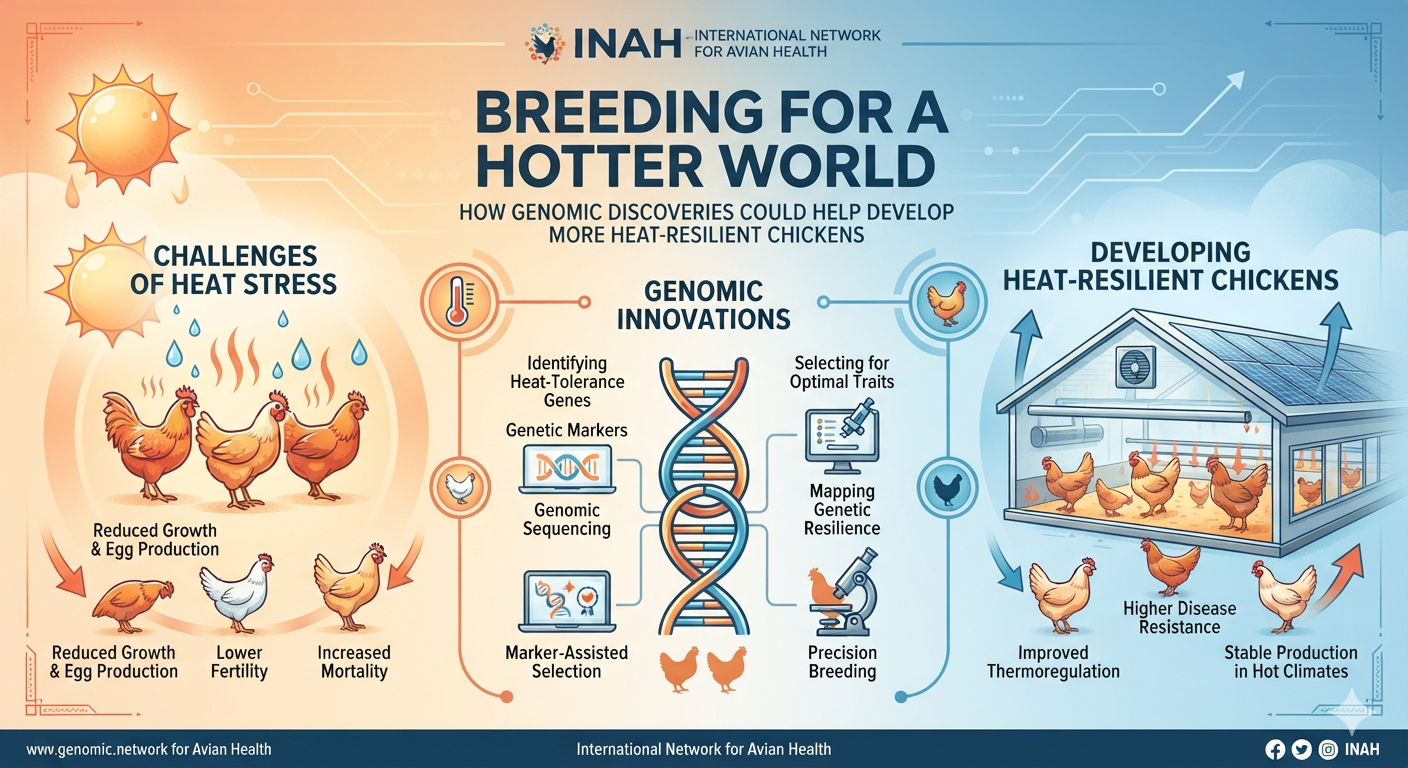
For the poultry industry, the challenge is no longer simply about maintaining productivity. It is also about developing birds that can remain healthy, resilient and productive under increasingly demanding environmental conditions.
New genomic discoveries are offering encouraging insights into how this might be achieved.
Two recent studies, published in Poultry Science and Scientific Reports in 2026, have identified genetic pathways and candidate genes associated with heat adaptation in chickens. These findings could help shape future breeding strategies, supporting the development of birds better equipped to cope with high temperatures.
Understanding the Biological Impact of Heat Stress
Heat stress is one of the most important environmental challenges affecting poultry health and production.
Unlike many mammals, chickens do not have sweat glands, making them particularly vulnerable to high environmental temperatures. Their ability to regulate body temperature depends heavily on behavioural and physiological mechanisms, including panting and changes in blood circulation.
When birds are exposed to excessive heat, several interconnected biological processes can be disrupted, including:
Metabolic function: Heat stress can reduce feed intake and disrupt energy metabolism.
Immune responses: Prolonged heat exposure can compromise immune function and increase susceptibility to disease.
Cardiovascular activity: Birds must work harder to dissipate body heat, placing additional demands on the cardiovascular system.
Growth and productivity: Reduced feed consumption and physiological stress can negatively affect growth rates, feed efficiency and reproductive performance.
Welfare: Sustained heat exposure can cause discomfort, physiological distress and, in severe cases, increased mortality.
Traditionally, poultry breeding programmes have prioritised characteristics such as body weight, feed conversion efficiency and reproductive performance. However, the growing frequency of extreme weather events is reinforcing the importance of incorporating environmental resilience into genetic selection.
New Genomic Research Reveals the Mechanisms Behind Heat Adaptation
A study published in Poultry Science in June 2026, entitled Integrative genomic analysis and gene expression patterns reveal a cardio-neuroendocrine signaling network for heat adaptation in geographically diverse chickens, investigated the genetic mechanisms that enable different chicken populations to adapt to high temperatures.
By combining genomic selection analyses with gene-expression data from multiple tissues, researchers identified 25 high-confidence genes associated with heat adaptation.
Among the most significant were:
ATP1A1: Involved in maintaining cellular ion balance and physiological function.
PLCB4: Associated with intracellular signalling pathways.
RYR2: Plays an important role in calcium regulation and cardiac muscle function.
AKT3: Involved in cellular survival and signalling processes.
One particularly important finding was the identification of an interconnected regulatory network involving the heart, hypothalamus and liver.
This suggests that heat adaptation is not controlled by a single gene or isolated physiological mechanism. Instead, it involves coordinated biological responses across multiple organs and systems.
Understanding these interactions could help researchers identify genetic variations associated with improved thermoregulation and physiological resilience.
Indigenous Chicken Breeds: An Important Resource for Genetic Diversity
A second study, published in Scientific Reports in April 2026, highlights the importance of indigenous chicken populations in understanding heat tolerance.
Researchers examined genetic diversity in indigenous chickens from Afghanistan, China, Indonesia, Iran and Pakistan, comparing their genomes with those of White Leghorn chickens.
The analysis identified 14 candidate genes within genomic regions associated with heat adaptation.
These included:
TRPV1, TRPV2 and TRPV3: Genes associated with temperature sensation and cellular responses to environmental stimuli.
BDNF: Involved in neurodevelopment and neuronal function.
CALM1: Plays an important role in calcium signalling and cellular regulation.
Other identified genes were associated with calcium transport, cellular signalling and neurological processes.
These discoveries highlight the evolutionary value of indigenous chicken populations, which have developed genetic characteristics through generations of adaptation to their local environments.
Their genetic diversity could represent an important resource for future breeding programmes, particularly as commercial poultry production expands into regions experiencing high temperatures.
Preserving indigenous breeds and their genetic resources is therefore not only important for biodiversity conservation but could also contribute to the long-term resilience of the global poultry sector.
What Could These Discoveries Mean for Poultry Breeding?
For breeding companies, hatcheries and poultry health professionals, these findings offer opportunities to rethink how future generations of chickens are selected.
Genomic information could eventually help identify parent stocks carrying genetic variations associated with:
Improved thermoregulation and heat tolerance.
More effective physiological responses to environmental stress.
Greater adaptability to different climatic conditions.
Improved maintenance of growth and productivity during periods of heat stress.
Better overall resilience under challenging production conditions.
The integration of genomic selection, gene-expression analysis and conventional breeding could help accelerate progress towards these objectives.
However, it is important to recognise that identifying candidate genes does not automatically establish that they will produce measurable improvements in commercial poultry populations.
Further research is required to validate these genetic associations across different breeds, production systems and environmental conditions. Researchers must also establish how heat-tolerance characteristics interact with other economically important traits, including growth, feed efficiency, fertility and disease resistance.
The Connection Between Genetics, Poultry Health and Animal Welfare
For the International Network for Avian Health, these developments are particularly relevant because genetic resilience should be considered an important component of a broader poultry health strategy.
Breeding birds with improved heat tolerance could help reduce the physiological burden associated with high temperatures, potentially supporting better health and welfare outcomes.
Nevertheless, genetic improvement should complement, rather than replace, effective environmental management.
Appropriate ventilation, reliable access to clean drinking water, effective cooling systems, suitable stocking densities and well-designed nutrition programmes will remain essential components of heat-stress prevention.
A holistic approach that combines genetic selection, good husbandry, veterinary care and environmental management will be necessary to protect poultry health as climatic conditions change.
Looking Ahead: Building a More Climate-Resilient Poultry Industry
The latest genomic discoveries represent an encouraging step towards understanding the biological foundations of heat adaptation in chickens.
By identifying genes and regulatory pathways associated with thermoregulation, cardiovascular function and cellular signalling, researchers are providing valuable information that could inform future poultry breeding strategies.
Perhaps most importantly, these studies reinforce the value of genetic diversity and the need to look beyond conventional production traits when developing the next generation of poultry.
As global temperatures continue to rise, the ability of chickens to maintain health, welfare and productivity under environmental pressure will become increasingly important.
At the International Network for Avian Health, we recognise that the future of poultry health depends on a multidisciplinary approach that brings together genetics, veterinary science, animal welfare and sustainable production. Developing more heat-resilient birds could become an important part of ensuring a healthier and more sustainable future for the global poultry industry.
Scientific References
Integrative genomic analysis and gene expression patterns reveal a cardio-neuroendocrine signaling network for heat adaptation in geographically diverse chickens. Poultry Science, 2026, Volume 105, Issue 6, Article 106744. https://doi.org/10.1016/j.psj.2026.106744
Hosseinzadeh, S. et al. (2026). Whole genome analysis of selection associated with resistance to heat stress in chickens. Scientific Reports, 16, 11726. https://doi.org/10.1038/s41598-026-41813-8
Further Reading
Original news article: New Genomic Discoveries Could Help Breed Heat-Resilient Chicks, aviNews, 6 November 2026.