Avian Influenza H5N1 Confirmed Near Garstang, Lancashire: New Protection and Surveillance Zones Declared
The UK has confirmed a new outbreak of highly pathogenic avian influenza (HPAI) H5N1 near Garstang, in Wyre, Lancashire, prompting the introduction of new statutory Protection and Surveillance Zones.
· 7 min read
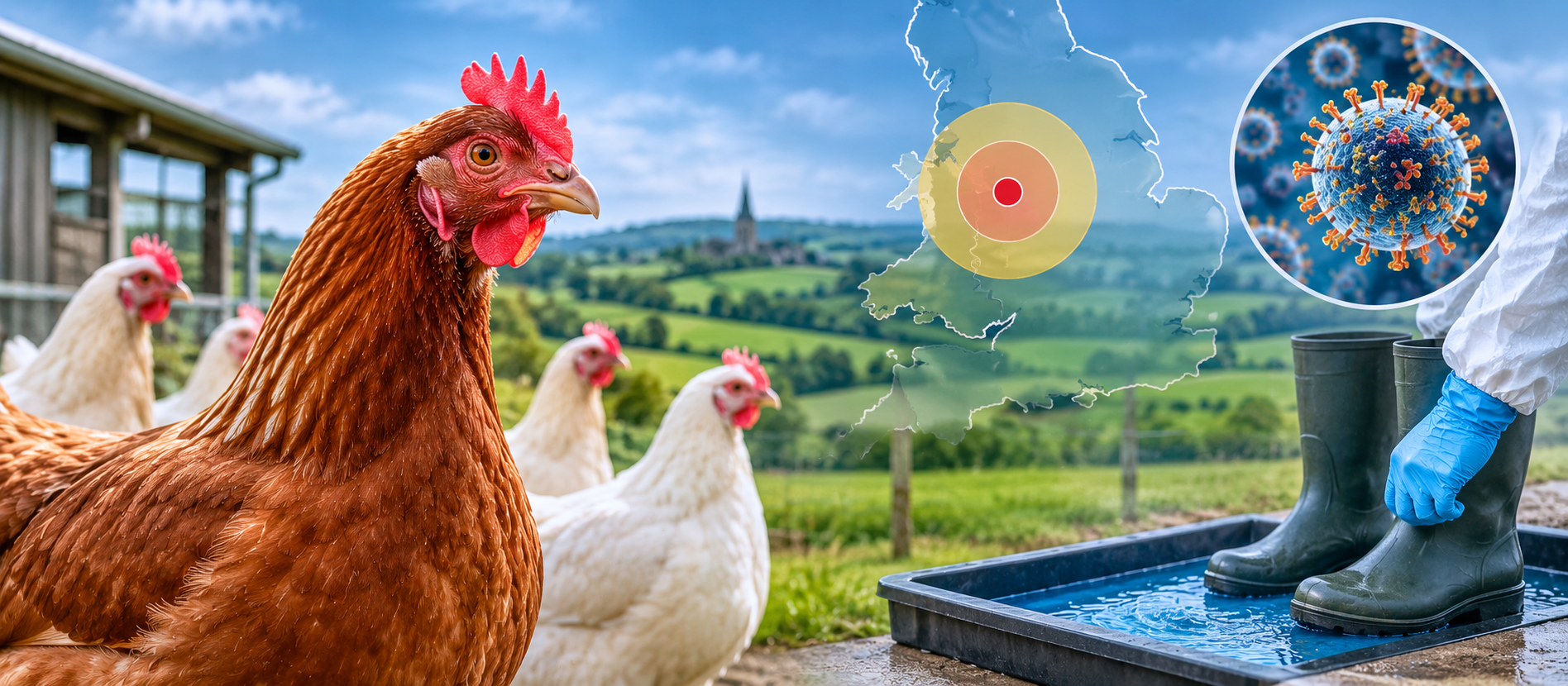
The UK has confirmed a new outbreak of highly pathogenic avian influenza (HPAI) H5N1 near Garstang, in Wyre, Lancashire, prompting the introduction of new statutory Protection and Surveillance Zones.
In a declaration issued by the Department for Environment, Food and Rural Affairs (Defra) on 7 November 2026, the Chief Veterinary Officer confirmed the presence of H5N1 and established a 3-kilometre Protection Zone and a 10-kilometre Surveillance Zone around the affected location.
The measures came into force at 17:35 on 7 November 2026 and will remain in place until withdrawn or amended by a further declaration.
The outbreak is a timely reminder that highly pathogenic avian influenza remains a significant threat to poultry health in the UK, requiring continued vigilance, effective farm biosecurity and rapid reporting of suspected infection.
declaration1. Outbreak location and control zones
The confirmed outbreak is located near Garstang, in Wyre, Lancashire, in north-west England.
Defra has established two statutory disease-control zones around the infected premises:
Protection Zone
3 km radiusThe inner zone, where the strictest movement restrictions and biosecurity requirements apply.Surveillance Zone
10 km radiusThe surrounding zone, where enhanced surveillance, movement controls and biosecurity requirements are in force.Both zones are centred on Ordnance Survey grid reference SD4255844966. The precise boundaries should be checked against the official map in the Defra declaration.
These zones are designed to reduce the risk of onward transmission, identify potentially infected premises and prevent the movement of infected birds or contaminated materials.
declaration2. What restrictions apply within the Protection Zone?
The 3-kilometre Protection Zone has the most stringent controls. Poultry keepers and businesses operating within this area must comply with a range of statutory requirements.
The principal measures include:
Housing and isolation of birds
Poultry and other captive birds must be housed. Where housing is impractical or would significantly compromise bird welfare, a veterinary inspector may direct that birds are kept isolated instead. In such cases, contact with birds on other premises and wild birds must be minimised.
Visitor and movement records
Keepers must maintain records of visitors, including their names, addresses, dates of visits and whether they had contact with poultry or other captive birds.
All poultry entering or leaving premises must also be recorded.
Reporting suspected disease
Any increase in mortality or morbidity, significant reduction in egg production, or relevant reduction in feed or water consumption must be reported immediately to the Secretary of State.
Restrictions on bird and product movements
The movement of poultry, captive birds and mammals to or from premises keeping birds is restricted unless authorised by a veterinary inspector.
Additional restrictions apply to the movement of poultry, poultry meat, eggs, hatching eggs, carcasses and other potentially contaminated materials. Certain movements are permitted under specific licensing conditions.
Restrictions on gatherings
Poultry and other captive birds cannot be brought together at fairs, markets, shows, exhibitions or other gatherings within the zone. The release of game birds is also prohibited.
Manure, litter and vehicle hygiene
The removal or spreading of used poultry litter, manure and slurry requires veterinary authorisation. Vehicles and equipment that may have become contaminated must be thoroughly cleansed and disinfected.
declaration3. What restrictions apply within the Surveillance Zone?
The 10-kilometre Surveillance Zone provides an additional layer of protection around the outbreak.
Although the requirements are less extensive than those in the inner Protection Zone, poultry keepers must still comply with important statutory controls.
These include:
Recording visitors to premises where poultry or captive birds are kept.
Maintaining records of poultry entering and leaving premises.
Immediately reporting increased mortality, morbidity or significant reductions in egg production, feed or water consumption.
Implementing appropriate biosecurity measures.
Obtaining veterinary authorisation for specified movements of poultry, captive birds and mammals.
Observing restrictions on the movement of poultry, eggs and potentially contaminated materials.
Preventing poultry and captive bird gatherings.
Restricting the movement and spreading of used poultry litter, manure and slurry unless authorised.
Ensuring appropriate cleansing and disinfection of vehicles and equipment.
A particularly important requirement is that poultry introduced into premises under an authorised movement within the Surveillance Zone must generally remain on those premises for at least 21 days.
declaration4. What does this mean for poultry producers?
The declaration has direct implications for commercial poultry businesses, backyard flock owners, gamebird keepers, transport operators and other businesses handling poultry or poultry products within the designated zones.
Producers should establish whether their premises fall within either zone and familiarise themselves with the specific restrictions that apply.
Practical priorities include:
Reviewing and strengthening farm biosecurity procedures.
Restricting non-essential visitors and maintaining accurate visitor records.
Preventing contact between domestic poultry and wild birds.
Monitoring birds closely for changes in behaviour, health, mortality, feed and water consumption, and egg production.
Maintaining accurate records of bird and egg movements.
Ensuring vehicles, equipment, footwear and clothing are appropriately cleaned and disinfected.
Seeking veterinary advice before arranging any movement that may be restricted.
Reporting suspected avian influenza immediately to the relevant veterinary authorities.
It is particularly important that poultry producers do not assume that routine commercial movements are automatically permitted. Specific veterinary licences or authorisations may be required.
declaration5. The importance of early detection and surveillance
The establishment of Protection and Surveillance Zones is a fundamental component of the UK's avian influenza control strategy.
The objective is not simply to restrict movements around an infected premises. It is also to identify other potentially affected holdings, monitor bird populations and prevent infection from spreading through poultry production networks.
Clinical surveillance is especially important. Poultry keepers should be alert to:
Sudden or unexplained increases in mortality.
Respiratory signs, including coughing and difficulty breathing.
Reduced feed and water consumption.
Drops in egg production.
Depression, lethargy or changes in behaviour.
Neurological signs or other unusual clinical presentations.
However, HPAI infection can sometimes occur with few obvious clinical signs, particularly in some bird species. Suspicion should therefore be investigated promptly through the appropriate veterinary channels.
The outbreak also highlights the importance of surveillance in wild birds, which can provide valuable information about the circulation of avian influenza viruses in the wider environment.
declaration6. What happens next?
The restrictions introduced on 7 November 2026 will remain in force until Defra withdraws or amends the declaration.
The next stages of disease control will involve veterinary investigations, surveillance of poultry holdings within the designated zones and assessment of the potential for further transmission.
The precise duration of the restrictions will depend on the epidemiological investigation and satisfaction of the relevant disease-control requirements.
Poultry keepers and businesses should regularly consult official Defra updates rather than assume that restrictions have expired.
Conclusion: vigilance and biosecurity remain essential
The confirmation of H5N1 near Garstang is a reminder that highly pathogenic avian influenza continues to pose a significant threat to poultry health in Great Britain.
The introduction of statutory 3-kilometre Protection and 10-kilometre Surveillance Zones is intended to contain the outbreak, minimise opportunities for onward transmission and support effective veterinary investigation.
For poultry producers, the immediate priorities are clear: understand the restrictions, maintain rigorous biosecurity, monitor birds carefully and report any suspicion of disease without delay.
Early detection, responsible management and cooperation between poultry keepers, veterinarians and animal health authorities remain our strongest defences against avian influenza.
The International Network for Avian Health (INAH) encourages all members of the poultry and veterinary communities to remain informed and support coordinated efforts to protect avian health.
Official report and further information
Source: Defra, Declaration of a Protection Zone and a Surveillance Zone (H5N1 Highly Pathogenic Avian Influenza) – near Garstang, Wyre, Lancashire (AIV 2026/24), 7 November 2026.
Read the full 16-page Defra declaration (PDF)UK Government – Animal disease cases in EnglandEditorial note: This blog summarises the statutory declaration. It does not establish the size of the infected flock, the source of infection or the number of birds affected, as these details are not provided in the document. The official map and subsequent amendments should be consulted before making operational decisions.